
May 6, 2026

SFPC Alumni Profiles is a series featuring students who are practicing poetic computation in their communities and work.
Where are you from and where are you living now?
Emily Corvi: I grew up on Long Island and am now living in Queens.
 Emily Corvi’s workspace in Queens
When did you study at SFPC?
EC: I took Spectacle, Presence and Poetry in Fall 2024. Hoping to take more in the future!
What’s been going on lately? Can you share a photo you’ve taken or image you’ve saved in the past week?
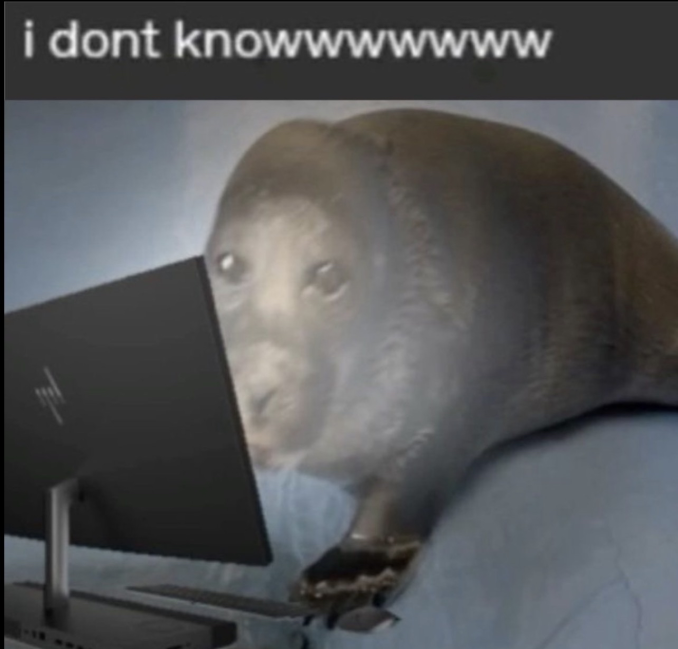
EC: Confused mammal sits at computer. Relatable.
How would you describe your work or practice?
EC: My work is purposely a bit all over the place and highly interdisciplinary -- I see merit in all sorts of information, data, theories and media and I view my finished work as mini curio cabinets (and my oeuvre as one big curio cabinet). They’re bits and bobs of things I’ve “collected” (and continued to collect!) over the years that I’ve assembled in a particular way for some effect, and I tend to recycle my ideas across all of the mediums that I work in. The way things get arranged depends on what I’m working on -- my poetry practice is different from my prose practice is different from my photography practice is different from my research practice is different from my crossword puzzle practice is different from my music practice. But they’re all related and in conversation with each other!
I think there are two constants for all of my creative practices: the first is that they’re all inherently iterative -- basically nothing that gets shared was my first stab at it, and I frequently revisit things long, LONG after I’ve started them. I have about a million different versions and snippets and drafts of everything. The second seems to be that all my best ideas hit me when I’m not in a state to effectively write them down (i.e. in the shower, crying, half-asleep, leaving a doctor’s office, on the train where writing gives me motion sickness, in a dream that I can’t remember, or any combination of those things).
 Emily’s thoughts, unraveled into a lexical corpus to be turned into a poem
Can you share about a project you made while studying at SFPC?
EC: Spectacle, Presence and Poetry gave me the gift of my ongoing journaling practice! As my final project for the class, I compiled journal entries where I had emotionally processed some really important things that were going on in my life, popped them into a .txt file, and had two friends help me write some code that output the words alphabetically and provided a token count for each word. The end result was a long, messy poem. Here’s my account of my creative process and the outcome:
“What does presence look like in a world where it is often unsafe for me to be present in the way I would like to be? How can I still show up? What can I passively reveal and what should I actively obfuscate?
This poem is an alphabetized list of all the words from important parts of my journal entries. These are my thoughts -- unraveled into a lexical corpus stripped of context, then re-woven into something semantically recognizable but materially and pragmatically different. Although this list was meant to essentially be just that -- a list of all the tokens that occurred in my journal -- the coincidental decision to keep the punctuation in this list wound up having the effect of punctuating, thus giving this work a poetic texture that I don't think it would have if [my friends and I] had decided to take out the punctuation like we intended to. The mechanical operation of alphabetizing multiple tokens also added a strange poetic effect to this list. The alliteration and assonance adds an almost-droning rhythmic effect that is promptly cut off not only by a new word, but also by the punctuation. Additionally, long stretches of text that contain the same word (i.e., "i") also work to "punctuate" the piece both visually and sonically. In addition to this alphabetized poem, a list of token counts for each word was also produced.
Emily’s shuffled poemOutside of the poem itself, this project made me realize just how much of my decades-long poetry practice has revolved around the notion of obscuring myself but remaining in plain sight as the author. I began taking Latin classes in high school because I was hellbent on writing my own Latin poems. I needed to get my feelings out of my system, but I didn’t want anyone to know what on earth I was saying. This poem feels like a more legible instantiation of that, nearly 15 years later.”
Outside of my time at SFPC, I was also conducting interdisciplinary research on representational harms (i.e. the real-world effects of generated utterances that demean, erase, or stereotype people) as produced by generative AI systems. You can read that research here.
 Emily’s research work on representational harms produced by generative AI systems
How do you define poetic computation?
EC: I see poetics as inter/intratext, the interplay of signs (linguistic or otherwise), and the “texture” that emerges from this interplay. I think everything is inherently poetic (whether or not the byproduct is beautiful, pleasing, or “useful” as most poetry is judged to be is a different question). I think this is also where my conceptualization of my work as a curio cabinet comes in. Computation has a literal definition for me, relating to thought and judgment. Poetic computation is simply the careful, meticulous curation of all kinds of semiotic resources and that process doesn’t necessarily need to happen digitally.
An alphabetized list of all the words from important parts of Emily’s journal entriesWhat is inspiring you lately?
EC: What’s been giving me hope is all the tech labor organizations that have been fighting to end the deadly and exploitative military contracts that their employers keep signing off on. Much love and solidarity to those people -- the world sees you and your efforts.
Recently, I’ve also been inspired by anyone who is consistently sharing their creative output. Producing anything creatively can be really taxing in itself, and it can be even more taxing to share personal work in our ridiculous attention economy/surveillance state where everyone has something to say about everything. The human drive to create and share is really beautiful, and I really admire people who dutifully follow that instinct.
What is something you would like to learn more about?
EC: I want to learn about (mostly) everything. But this past fall I took a course on aesthetics and it totally opened my eyes to the link between aesthetic experiences and sensory experiences. Which seems so obvious in hindsight but it wasn’t a connection I had made! So right now I’ve been thinking a lot about cultural understandings of the senses, the phenomenological experience(s) of being chronically ill, and where these two intersect. Also, math.
What is in your poetic toolkit?
EC: Neurosis and overintellectualization (not an endorsement), Notepad/notepads/Notes, Google Scholar, my local library, my friends' institutional access when all else fails, my Miffy pens, a $10 Instax score from Facebook Marketplace, a crappy scanner that I constantly have to wrestle with, Wiktionary, Wikipedia, Ingrid for crosswords.
 Ingrid app for crossword construction
What’s a song you’ve been listening to lately?
EC: Let's Get This Party Over With by WTCHCRFT.
Follow Emily Corvi’s substack where they write about culture, theory, the internet, and technology. You can also find them on their website and on Twitter.